
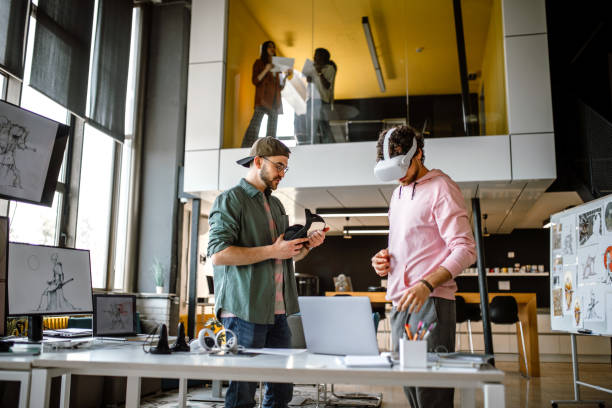
Virtual reality (VR) has finally grown up in 2026. It’s not just about putting on a headset and pretending to swing a lightsaber—though that’s still fun—it’s becoming part of how we work, learn, socialize, and even travel. I tested a few next-gen VR headsets recently, and honestly, I forgot I was sitting in my living room for almost an hour. The tech has evolved from clunky and gimmicky to immersive and genuinely useful.
VR in the Workplace
Companies are using VR for training, meetings, and collaboration. Imagine onboarding employees in a virtual office where they can interact with tools, simulate tasks, and practice scenarios without real-world consequences. I experienced a virtual team brainstorming session, and it actually felt more engaging than a regular Zoom call—plus, no one had bad Wi-Fi interruptions.
Education Gets Immersive
Classrooms are integrating VR for experiential learning. Students can tour historical sites, conduct virtual science experiments, or explore microscopic worlds. I tried a virtual anatomy lab where I could manipulate organs in 3D. It was hilarious at first—I accidentally put a heart in the stomach area—but also incredibly memorable. VR makes abstract or difficult concepts tangible.
Social and Entertainment Experiences
Social VR apps now let people meet in virtual spaces for parties, concerts, or just hanging out. I attended a VR music festival with friends across the country—it felt chaotic but fun. The tech allows shared experiences without geographical limits, though I won’t lie, it’s slightly disorienting at times.
Fitness and Wellness
VR fitness games are huge in 2026. Boxing, dancing, or even yoga in virtual environments keeps you active while having fun. I tried a VR rock climbing simulation—sweaty, scary, and oddly satisfying. It’s a way to combine exercise with entertainment that actually makes you want to move.
Travel and Exploration
Can’t travel? VR brings destinations to you. I “visited” the Amazon rainforest and the Great Wall of China in one evening without leaving my apartment. It’s not a perfect substitute for real travel, but it’s a great teaser or educational tool. VR travel also makes inaccessible locations more available to students, researchers, and enthusiasts.
Therapy and Mental Health
Therapists are using VR for exposure therapy, stress relief, and mindfulness exercises. I tried a VR meditation app that simulated sitting by a tranquil waterfall. It was surprisingly calming, and I didn’t even need to leave my noisy apartment. VR has the potential to supplement traditional mental health practices.
Challenges Remain
VR isn’t perfect. Motion sickness, headset discomfort, and accessibility issues still exist. I personally got dizzy after about 45 minutes in one demo headset. Also, the tech isn’t cheap, and not everyone has the space to move safely while immersed. Privacy and data collection are also concerns—companies know a lot about your movements and reactions.
Looking Ahead
VR in 2026 is more than just a toy—it’s a tool, a platform, and a social space. From work and education to fitness and therapy, VR is pushing boundaries of how we experience the world. It’s immersive, interactive, and increasingly integrated into daily life.