
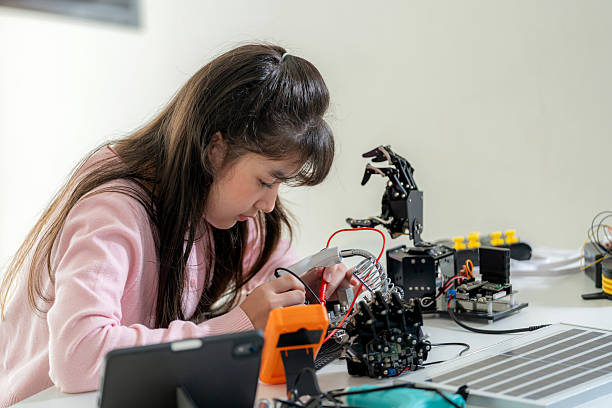
Classrooms Are Changing Fast
Remember chalkboards? Yeah, me neither. Technology is reshaping classrooms in ways that feel like something out of a sci-fi movie. Five years ago, most of my school experiences were still pen-and-paper based, but last year I walked into a classroom and felt like I had entered a future lab. From AI tutors to interactive whiteboards, the way students learn now is completely different. I sat through a lesson on chemical reactions using an interactive tablet, and honestly, I forgot I was in class—it felt like a game, not a lecture.
The biggest change is that learning is no longer one-size-fits-all. Back in the day, if you couldn’t keep up, tough luck. Now, technology is adapting lessons to the individual, and that’s a game-changer. Social media, EdTech forums, and even student blogs are filled with examples of how classrooms are becoming more personalized and engaging. I spent way too long scrolling TikTok videos showing interactive biology labs, and yes, I may have learned a thing or two just from watching them.
Interactive Learning Tools
Tablets, apps, and smartboards are making lessons interactive. Instead of staring at a static textbook, students can manipulate 3D models, conduct virtual experiments, and even annotate slides in real time. I tried an interactive science simulation once, and I completely forgot it was technically “classwork.” For once, I wasn’t bored—I was genuinely curious.
These tools also help teachers track engagement. They can see which students are struggling, who’s excelling, and even which parts of the lesson are confusing. I remember a teacher showing me the dashboard of an interactive lesson, and it felt like reading your brain’s activity—but less creepy. For students who are visual or hands-on learners, this tech is basically a gift from the education gods.
Personalized Learning
AI and adaptive learning platforms are now tailoring lessons to each student’s pace. I’ve seen students who struggled for months suddenly excel because the software adjusted difficulty levels, gave extra hints, or changed teaching approaches. It’s like having a private tutor for everyone, 24/7.
I remember my cousin struggling with math. She started using an adaptive learning app, and within a few weeks, she went from “I hate algebra” to “Wait, I think I actually get this.” Personalized learning doesn’t just improve grades—it boosts confidence, which is sometimes half the battle. And yes, it also makes parents slightly less stressed.
Virtual and Augmented Reality
VR and AR are taking field trips to another level. Imagine exploring the pyramids from your classroom or dissecting a frog without ever dealing with the smell. I tested an AR biology app recently and completely forgot I wasn’t physically there. It’s immersive, hilarious, and just a little mind-bending.
VR field trips aren’t just cool—they help students visualize concepts they might never experience otherwise. Geography lessons come alive when you can “fly” over mountains or rivers. History classes feel like you’re stepping into another century. I even saw a physics lesson where students could manipulate forces in 3D space—my brain hurt, but in a fun way.
Collaboration Across Borders
Technology also lets students collaborate globally. I remember a project I participated in with classmates from three different countries. It was messy at times—time zones, Wi-Fi glitches, and cultural misunderstandings—but incredibly eye-opening. Students learned cultural awareness, teamwork, and problem-solving simultaneously.
Social media is helping this trend too. Schools are sharing how they’re connecting classrooms worldwide, and students are posting videos of virtual collaborations, creative projects, and even cross-country debates. It’s wild to think that students in New York, Tokyo, and Nairobi can now work on a science project together in real time.
Challenges and Limitations
Of course, not every classroom is experiencing this futuristic setup. Technology access varies widely. Some schools still struggle with outdated devices or poor internet. Teacher training is crucial—having the tools isn’t enough if instructors don’t know how to use them effectively. Student engagement is another factor: some learners thrive with tech, others get distracted by the endless rabbit hole of online content (guilty as charged).
Even with these hurdles, the trend is clear: technology is reshaping education in ways we couldn’t have imagined a decade ago. Classrooms are becoming more interactive, personalized, and globally connected. And honestly, it’s exciting to see what comes next.
Disclaimer
Technology use in classrooms varies. Effectiveness depends on access, teacher training, student engagement, and quality of tools. Experiences may differ, and my examples are anecdotal observations, not formal studies.
Wrap-Up
From interactive apps to personalized AI lessons, VR adventures, and global collaborations, technology is transforming classrooms in 2026. Learning is no longer passive; it’s immersive, engaging, and adaptive to individual needs. While challenges remain, the potential is enormous. For students, parents, and educators alike, embracing technology in education can make lessons more meaningful, exciting, and even fun.